


Types of Scaffolding and Their Uses in Construction
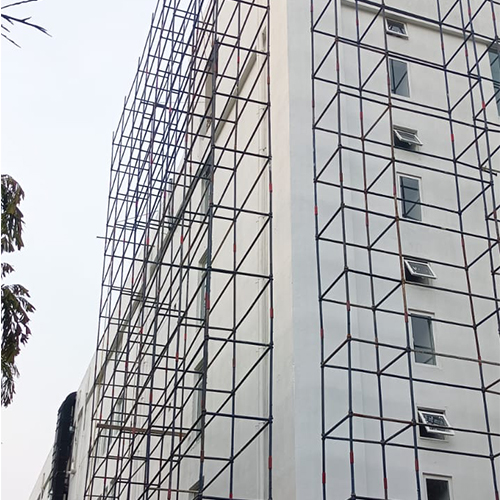
Types of
Scaffolding and Their Uses in Construction
Scaffolding plays a critical role in the construction
industry by providing safe, stable, and elevated platforms for workers. Whether
managing a residential build, a massive commercial project, industrial
maintenance, or routine renovations, choosing the right scaffolding system
directly improves site safety, workflow efficiency, and overall productivity.
Today, modern construction rely on specialized scaffolding
systems tailored to specific project heights, load capacities, and
environmental conditions.
What is
Scaffolding?
Scaffolding is a temporary engineering structure used to
support workforce personnel and building materials during construction,
maintenance, painting, plastering, and repair work. Usually fabricated from
heavy-duty steel or lightweight aluminum, these systems ensure structural
stability and strict compliance with site safety standards.
The 7
Main Types of Scaffolding & Their Applications
1. Frame
Scaffolding (Modular Frames)
Frame scaffolding is the most prevalent system utilized in
everyday construction. It features pre-fabricated vertical frames connected by
modular cross-bracing to support structural walking planks.
- Best
Used For: Standard residential and low-rise commercial projects.
- Key
Benefits: Fast assembly, highly cost-effective, easy to transport, and
structurally predictable.
2.
Cuplock Scaffolding
Cuplock scaffolding is a heavy-duty system utilizing a
unique "cup-and-blade" locking mechanism. It allows up to four
horizontal bars to connect to a single vertical standard in a single locking
action.
- Best
Used For: Large-scale commercial construction, heavy civil
engineering, and industrial facilities.
- Key
Benefits: Extreme load-bearing capacity, rapid installation, low
maintenance, and highly secure locking.
3. Tube
and Coupler Scaffolding
Often called independent scaffolding, this system relies on
steel or aluminum tubes linked together using flexible couplers. It offers
infinite dimensional variability.
- Best
Used For: Irregular building shapes, complex architectural facades,
and tight spaces.
- Key
Benefits: Unmatched structural flexibility, highly customizable,
durable, and easily adaptable to obstacles.
4. Mobile
Scaffolding (Rolling Towers)
Mobile scaffolding features sturdy caster wheels attached to
the base of a frame or aluminum tower.
- Best
Used For: Interior electrical work, ceiling installations, painting,
and localized maintenance.
- Key
Benefits: Effortless mobility across flat surfaces, saves time on
repositioning, and increases worker independence.
5.
Suspended Scaffolding (Swing Stages)
This platform is suspended from an upper structural roof
system via heavy-duty wire ropes or cables equipped with electric pulleys.
- Best
Used For: High-rise window cleaning, exterior painting, facade
repairs, and skyscrapers.
- Key
Benefits: Eliminates ground-level footprint, infinite height
capability, adjustable on the fly, and keeps sidewalks clear.
6. Cantilever Scaffolding (Needle Scaffolding)
Cantilever scaffolding is anchored by horizontal support
beams (needles) projecting outward from the building structure itself rather
than resting on the ground.
- Best
Used For: Busy urban streets, areas with unstable ground soil, or
upper-story structural repairs where the lower floor cannot be obstructed.
- Key
Benefits: Solves severe ground-space constraints and provides reliable
support over open drops.
7.
Aluminum Scaffolding
Engineered from high-grade aluminum alloys, this type offers
a lightweight alternative to traditional steel frameworks.
- Best
Used For: Quick internal fit-outs, historical restoration projects,
and domestic maintenance.
- Key
Benefits: Exceptionally lightweight, completely rust-proof, easy
handling, and leaves no scuff marks on interior floors.
Why
Selecting the Right Scaffolding Matters
Deploying an incorrect system on a job site risks worker
safety and project timelines. Making the correct choice ensures:
- Enhanced
Site Safety: Drastically reduces the risk of structural failure and
falls.
- Optimized
Load Handling: Safely supports heavy materials like bricks, concrete
blocks, and tools.
- Accelerated
Project Timelines: Easy-to-use systems save hundreds of labor hours
during assembly and teardown.
Before starting your next project, evaluate your site based
on building height, total weight capacity, ground conditions,
and project duration to deploy the perfect scaffolding solution.
Frequently
Asked Questions (FAQs)
How do I choose the right scaffolding system for my
project?
You must base your selection on the
specific building height, the maximum weight load of your materials, the ground
stability at the site, and the overall architectural shape of the structure.
Steel vs. Aluminum scaffolding: What is the main
difference?
Steel scaffolding is heavy-duty and
designed to handle massive construction loads and masonry materials. Aluminum
scaffolding is lightweight, completely rust-proof, and ideal for quick setups
or interior maintenance work.
When is Cantilever
scaffolding specifically used?
It is used when the ground space below
is completely blocked, too weak to support a frame, or located right next to
busy street traffic where you cannot set up a base.
Can you safely
move Mobile scaffolding while workers are still on it?
Absolutely not. All workers must
completely step off the platform before moving the structure to prevent it from
tipping over and causing severe injuries.
How often should a
scaffolding structure be inspected on a job site?
It must be inspected daily. A
certified, competent person needs to thoroughly check the entire structure for
safety issues before every single work shift begins.